Aprons are one of the most versatile items of protective clothing — used across food service, butchery, welding, chemical handling, laboratory work and general trade environments in Ireland. This guide covers every main type, the CE standards that apply, and what to look for when buying.
Types of Work Apron Available in Ireland
| Type | Material | CE Required | Primary Use |
|---|---|---|---|
| Leather / welding apron | Split leather or full grain | Yes (EN ISO 11611) | Welding, blacksmithing, metalwork |
| Chainmail / cut-resistant | Stainless steel chainmail or UHMWPE | Yes (EN 13998) | Butchery, meat processing, fish filleting |
| Chemical / rubber apron | PVC, neoprene or butyl rubber | Yes (EN 14605) | Chemical handling, laboratory, cleaning |
| PVC / waterproof | PVC or polyurethane | No (general use) | Food processing, industrial cleaning, wet work |
| Disposable | Polypropylene or polythene | No | Food service, catering, healthcare, light manufacturing |
| Canvas / denim | Heavy cotton or denim | No | Woodworking, craft, food service, general trade |
Cut-Resistant Aprons for Butchers and Food Processing
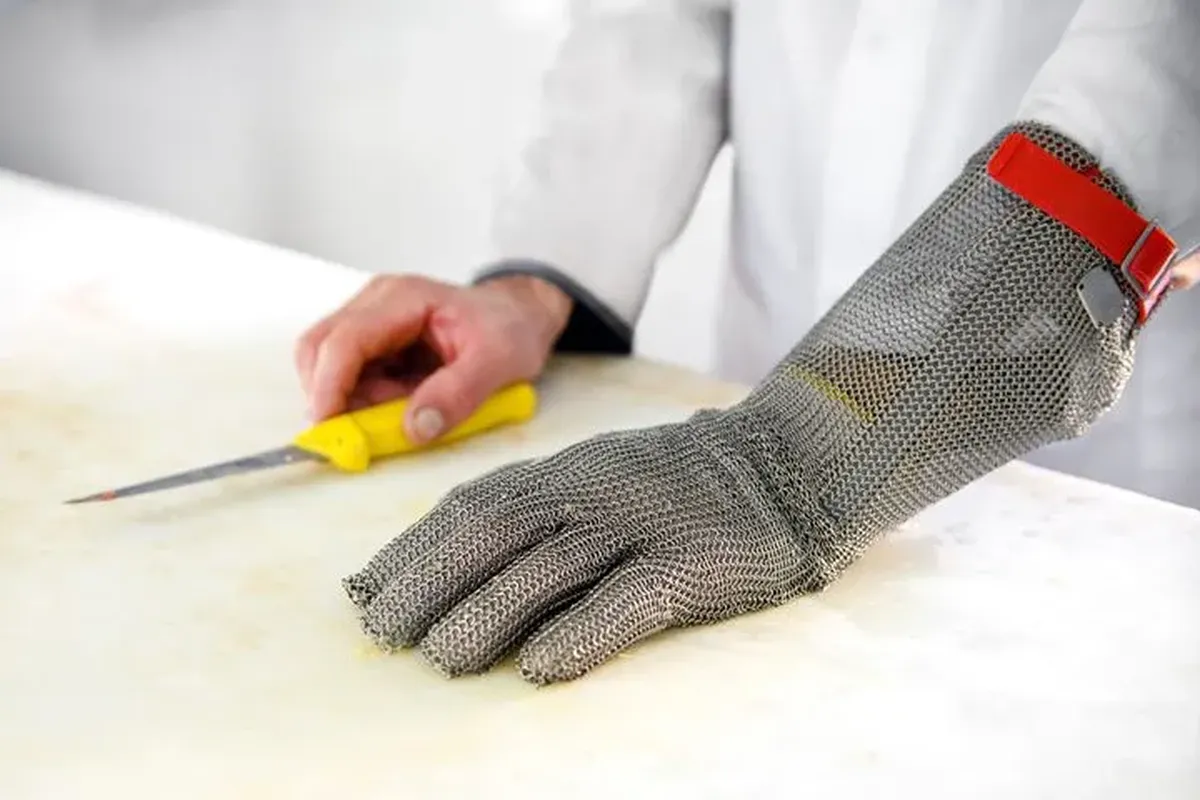
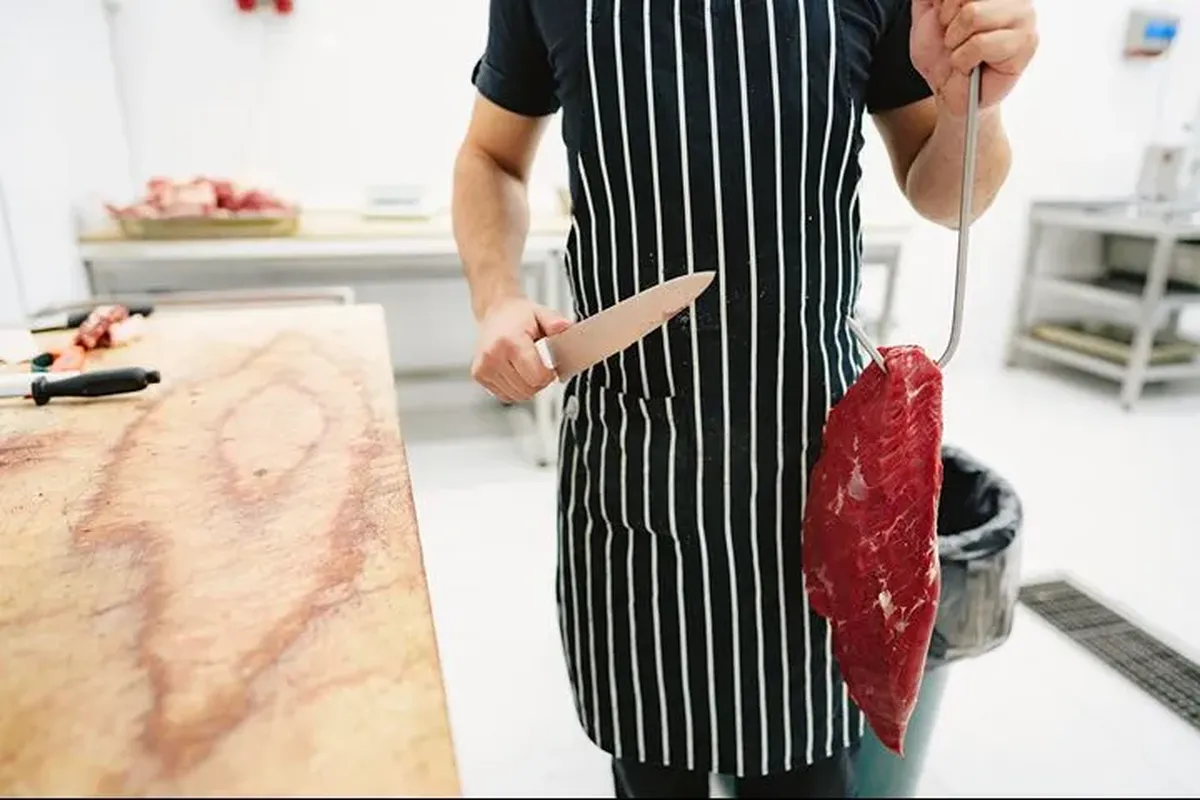
The food processing and butchery sector in Ireland — from small local butchers to large meat processing plants — requires cut-resistant apron protection for workers using knives and cutting machinery. CE-certified cut-resistant aprons must meet EN 13998, which tests resistance to cutting by hand knives. Stainless steel chainmail aprons offer the highest cut resistance and are the standard in Irish abattoirs. For environments where the knife contact risk is lower, UHMWPE cut-resistant fabric aprons are lighter and more comfortable while offering good protection. These should also be combined with cut-resistant gloves and appropriate footwear.
Chemical and Rubber Aprons
Chemical aprons must be matched to the specific chemicals in use — the wrong material can allow penetration and provide false confidence. Key options: PVC aprons resist dilute acids, alkalis and many water-based chemicals and are the most widely used option in Irish industrial and laboratory settings; neoprene aprons offer broader chemical resistance including some organic solvents; butyl rubber is appropriate for highly corrosive substances and ketones. Always check the chemical permeation data on the product specification against the SDS for chemicals in your workplace before purchasing.
Welding Aprons
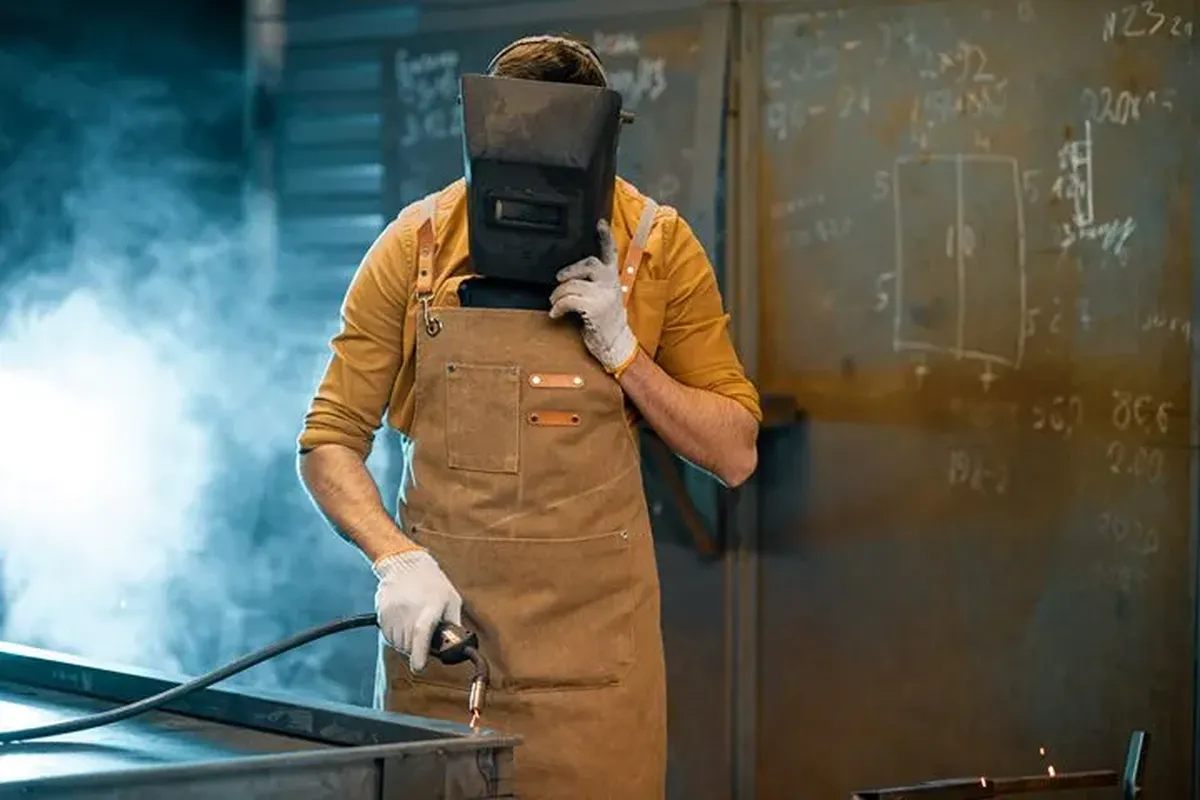
Leather and FR welding aprons are covered in detail in our dedicated welding aprons Ireland guide. In summary: split leather bib aprons are the standard for most welding environments in Ireland, providing good spatter resistance and durability. They must carry EN ISO 11611 certification for use as PPE in welding environments.
Disposable Aprons for Food and Healthcare
Disposable polythene aprons are a staple of Irish food service and healthcare environments. They are cost-effective, hygienic, and support HACCP colour-coding practices. Blue, white, yellow and green disposable aprons are used in Irish food businesses to differentiate between handling areas and allergen zones. They are available in boxes of 100 through Irish catering suppliers and are not required to carry CE marking for food handling or general healthcare use.
What to Look for When Buying Aprons in Ireland
| Factor | What to Check |
|---|---|
| Hazard match | Match the apron material to the specific hazard — a PVC apron offers no protection against welding spatter; a leather apron offers no chemical protection. |
| CE mark and standard | Required for welding, cut-resistant and chemical aprons used as PPE. General food service and craft aprons do not require CE marking. |
| Coverage | Bib aprons cover chest to knee. Waist aprons offer less coverage but more mobility. Confirm the coverage is appropriate for the hazard and working position. |
| Strap adjustment | Neck and waist straps should be fully adjustable. Quick-release fastenings are important for welding and chemical environments where rapid removal may be needed. |
| Durability | Leather and rubber aprons can last years with care. PVC and canvas aprons have shorter service lives but lower replacement cost. |
Frequently Asked Questions
Stainless steel chainmail aprons certified to EN 13998 for the highest cut resistance. For lower knife-contact risk, UHMWPE cut-resistant fabric aprons are lighter and more comfortable. Combine with cut-resistant gloves and appropriate footwear.
Match the material to the chemical — PVC for dilute acids and alkalis, neoprene for broader chemical resistance, butyl rubber for highly corrosive substances. Always check chemical permeation data against your specific chemicals using the product SDS.
Yes. Disposable polythene aprons are widely used in Irish food service for hygiene and HACCP colour-coding. They do not require CE marking for food handling use and are available in colour-coded options for allergen zone separation.
BodyArmour.ie
Ireland's independent guide to protective clothing and PPE. We cover personal protection, industrial workwear and safety clothing to help Irish buyers make informed decisions.