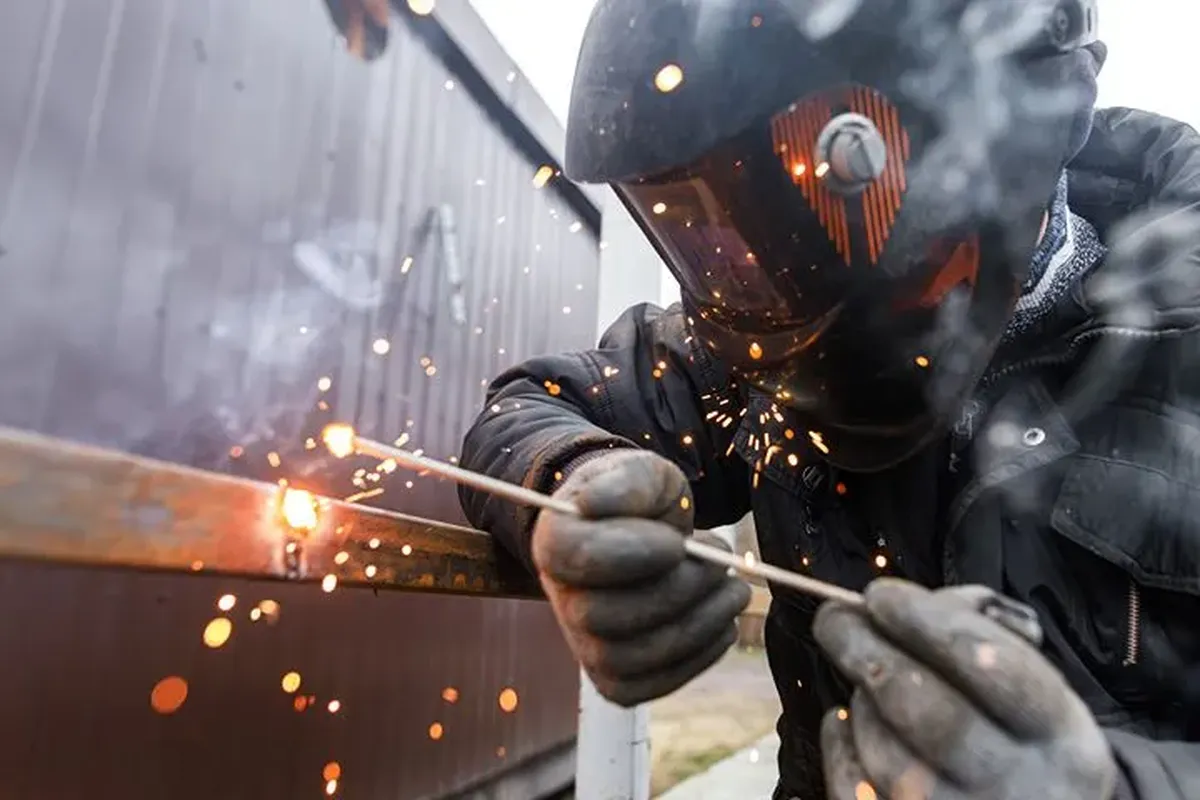
Welding aprons provide targeted front-body protection against spatter, radiant heat and UV radiation — either as a standalone garment for lighter welding tasks or as an additional layer over welding overalls for high-spatter production work. This guide covers the main types, materials, and what to look for when buying in Ireland.
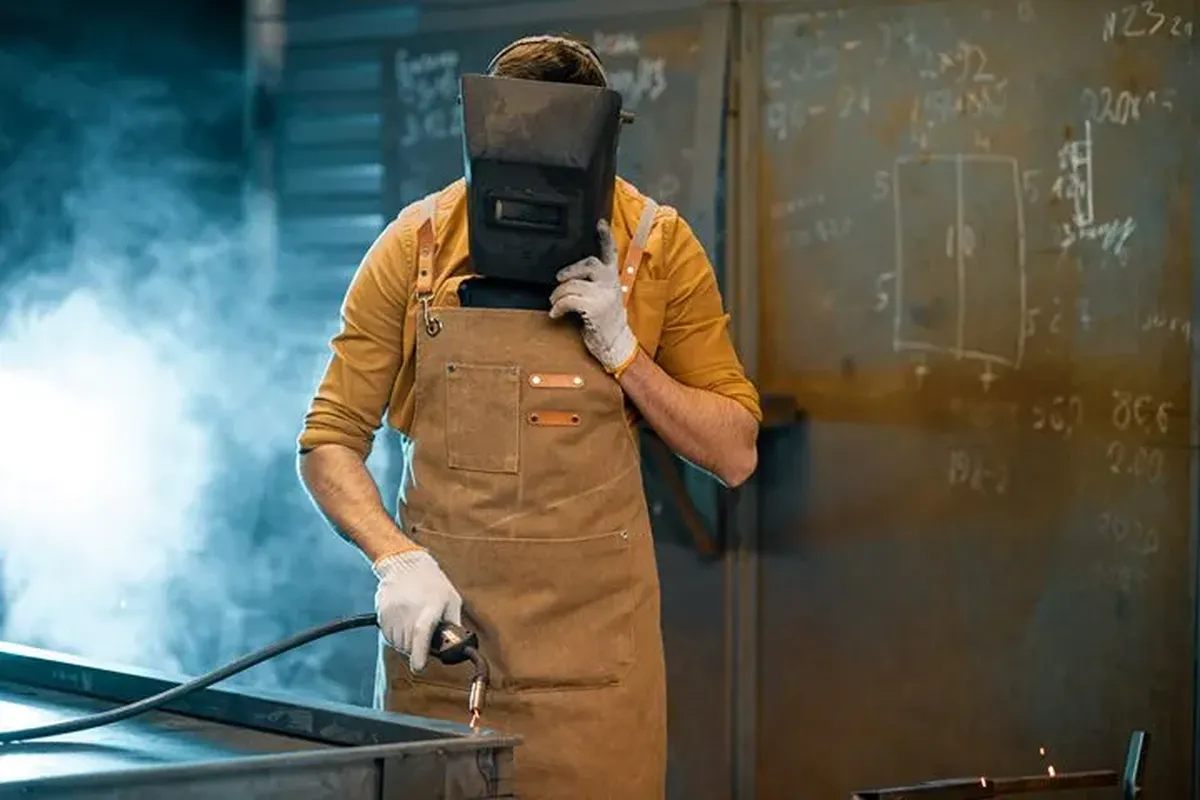
Types of Welding Apron
| Type | Coverage | Best For |
|---|---|---|
| Bib apron | Chest to knee or mid-thigh | General welding, most versatile option |
| Waist apron | Waist to knee | Bench work, less front mobility needed |
| Full-length apron | Chest to ankle | Heavy production welding, maximum spatter scatter |
| Sleeved apron / split leg | Torso + sleeves or split leg coverage | Overhead welding, confined space work |
For most Irish welders doing bench or positional work, a bib apron is the most practical choice. Full-length aprons are heavier and more restrictive but offer significantly more coverage for production environments.
Leather vs FR Fabric — Which Welding Apron Material?
| Material | Spatter Resistance | Heat Protection | Comfort | Durability |
|---|---|---|---|---|
| Split leather | Excellent | Excellent | Stiff initially, softens with use | Very high — years of use |
| Full grain leather | Superior | Superior | Heavy, less flexible | Highest — professional grade |
| FR cotton fabric | Good | Good | Lightweight, flexible | Moderate — less durable than leather |
| Aluminised fabric | Good | Excellent radiant heat | Lightweight | Moderate |
Split leather is the most widely used material for welding aprons in Ireland and represents the best balance of protection, durability and cost. FR cotton aprons are a practical alternative for TIG and lighter welding where comfort over longer periods matters more than maximum spatter resistance.
CE Certification for Welding Aprons
Welding aprons used as PPE must be CE certified. The relevant standards are EN ISO 11611 (welding and allied processes) and EN ISO 11612 (heat and flame). A CE-marked welding apron will carry these standard references on the label alongside the class. Non-CE leather aprons are available from craft and agricultural suppliers — these may be durable but offer no verified protection against welding hazards and should not be used as PPE.
Leather Aprons Beyond Welding
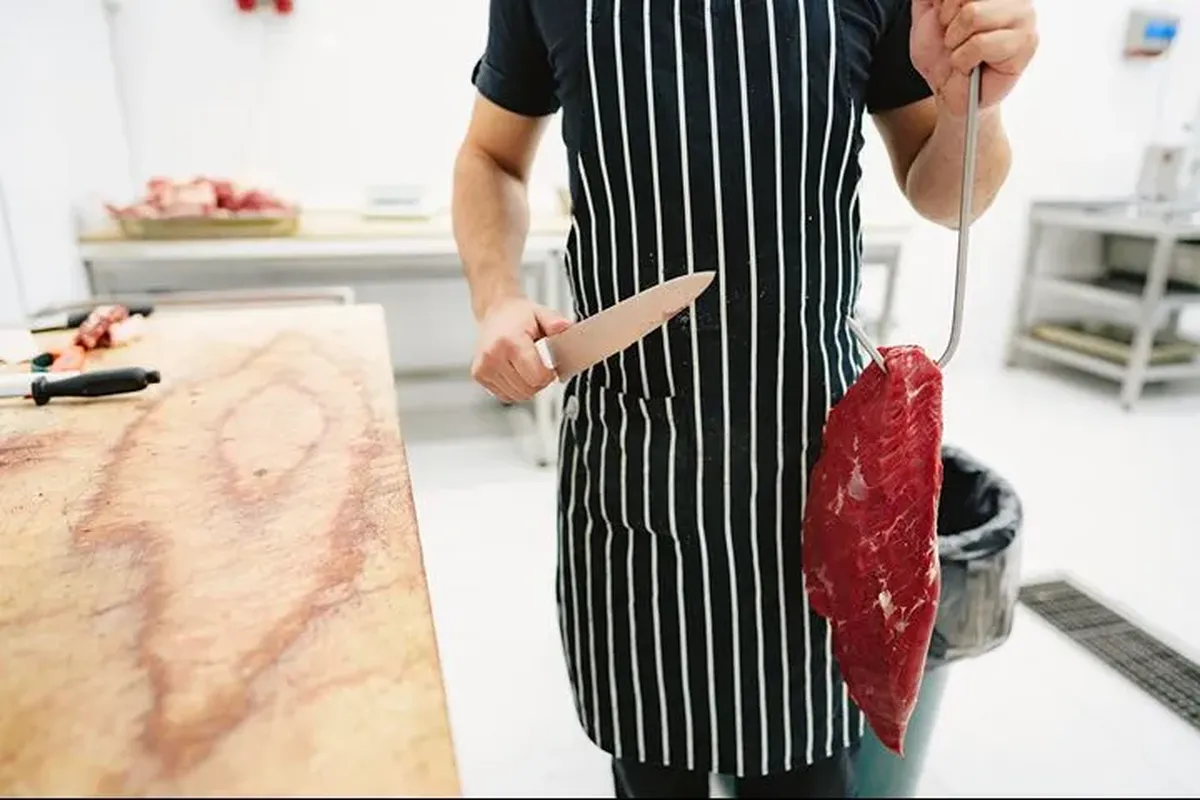
Leather aprons are also widely used in blacksmithing, metalwork, woodworking, glassblowing and culinary contexts. For non-welding applications, CE marking for welding specifically is less relevant — the key considerations are quality of leather, strap adjustment, and coverage for the intended task. See our full aprons guide for butcher, chemical and general work apron options alongside welding.
What to Look for When Buying a Welding Apron in Ireland
| Factor | What to Check |
|---|---|
| CE mark | Required if used as PPE. Look for EN ISO 11611 or EN ISO 11612 on the label. |
| Material thickness | Leather aprons — 1.2mm minimum for welding use. Thicker leather (1.5–2mm) for heavy production work. |
| Strap adjustment | Neck and waist straps should be fully adjustable for a secure fit. Quick-release buckles are safer in an emergency. |
| Pocket placement | Front pockets catch spatter — most quality welding aprons avoid them or use covered flap pockets. |
| Stitching | Double or triple stitched seams with FR or heat-resistant thread for longevity under welding conditions. |
Where to Buy Welding Aprons in Ireland
Welding aprons are available through Irish welding suppliers, agricultural merchants and online. Portwest, Weldclass and standard leather craft suppliers all produce welding aprons available in Ireland. For CE-certified options, purchase through a recognised PPE supplier rather than generic leather goods retailers to ensure the certification documentation is genuine. See our welding overalls guide for full-body welding protection options.
Frequently Asked Questions
Not necessarily. Class 2 EN ISO 11611 welding overalls provide sufficient front-body protection for most processes. An apron adds an extra layer useful for prolonged heavy welding, overhead work, or bench work with high spatter concentration. Many professional welders use both for production work.
Split leather for MIG and MMA work where spatter resistance and durability are priorities. FR cotton for TIG and lighter processes where comfort over long periods is more important. Both are valid — the choice depends on the welding process and duration of wear.
Bib aprons (chest to knee) are the most versatile for general welding. Waist aprons suit bench work. Full-length aprons provide maximum coverage for heavy production welding with significant spatter scatter.
BodyArmour.ie
Ireland's independent guide to protective clothing and PPE. We cover personal protection, industrial workwear and safety clothing to help Irish buyers make informed decisions.